Four stories, one week
For a long time the AI-music conversation was about what is possible. This week it turned into a question of who pays.
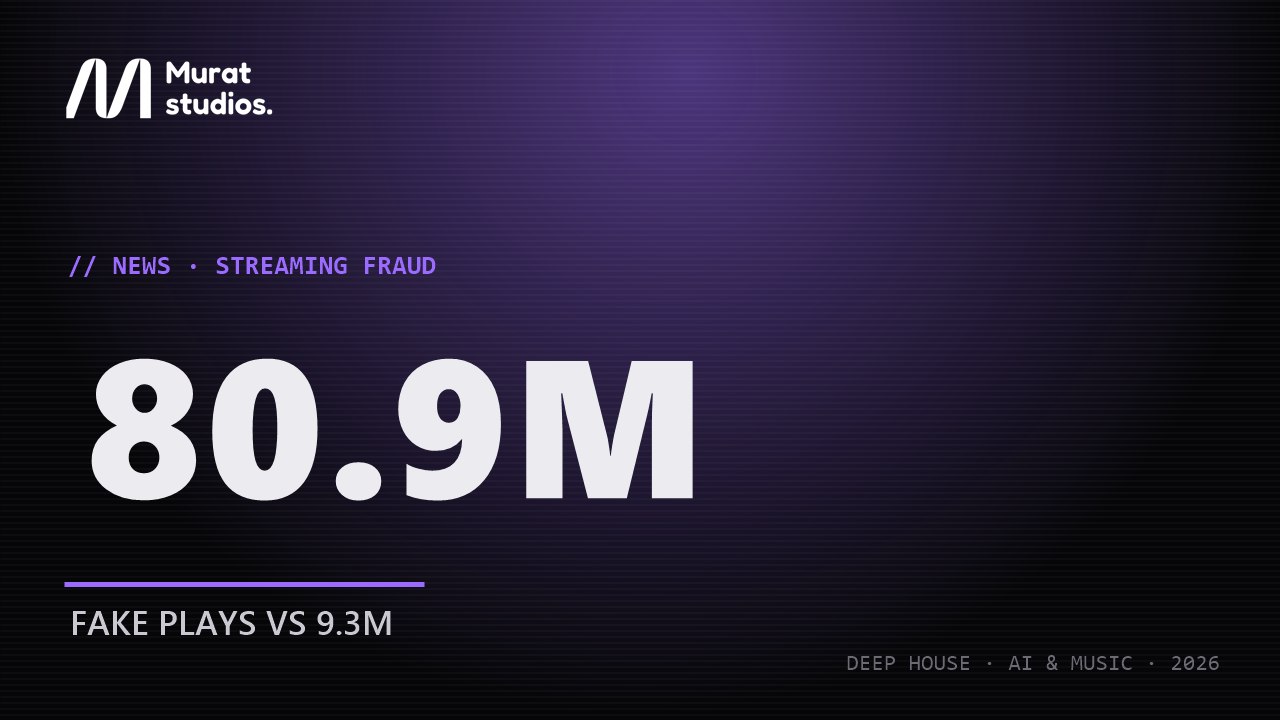
- Tuesday, October 6 — a sentence. Michael Smith, the man behind the AI-song and bot-streaming scheme, got 18 months in prison from Judge John G. Koeltl in Manhattan, plus two years of supervision and forfeiture of $8,091,843.64. Prosecutors had asked for at least 46 months — I covered the case before the hearing.
- Sony's takedown count. According to Financial Times reporting relayed by Digital Music News, Sony Music had sent more than 250,000 takedown requests against soundalike and deepfake tracks by the end of September.
- Tuesday, October 6 — Italy. The Italian competition authority opened a formal investigation into Suno over allegedly unfair contract terms, including how copyright and moral rights are handled. A public consultation is due in the coming weeks.
- In court. In a filing dated September 1, Suno admitted that it obtained audio from YouTube to train its models. More on that below.
What Suno actually admitted
The filing sits in the case brought by Universal Music Group, Capitol Records and Sony Music in the US District Court for the District of Massachusetts. Suno wrote that "audio data was obtained from YouTube for use as training data using YT-DLP" — a tool for downloading audio from online videos.
Suno does not concede wrongdoing. It argues that its technology is fair use — a back-end process, invisible to the public, that produces a new product — and it challenges whether the labels have standing for the part of their claim about circumventing YouTube's protections. A court will decide. I am a producer, not a lawyer.
What I can say is how it feels from the creator side: a platform where I publish my work for listeners may also have been a quarry for a machine. And nobody can tell me whether any of it was mine.
«The crime was never "using AI". It is taking what other people made and passing it off as demand, or as supply.» — Murat Koff
The arithmetic of a takedown
More than 250,000 takedown requests is what a major label with lawyers and tooling can do. Meanwhile Deezer was reporting roughly 90,000 AI-generated tracks per day by July — I wrote about it in my weekly briefing. An independent producer has no legal department. A takedown form is not a strategy; it is a lottery ticket.
The same logic is why I wrote that Spotify killed the remix: when the platform sets the rules, the artist is a tenant.
What I do about it
Two things. First, I release music that is mine — made by me, in a studio, for the late drives. Second, I keep a home base that does not depend on any platform's mood: this website. Yes, I built it with AI tools acting as my developer — in three languages. That is a different story from generating songs out of scraped audio, and I will not pretend otherwise: the music stays human, the plumbing got faster.
A website you control.
If you are a musician, creator or freelancer and want your own corner of the internet, I wrote the whole process down: 7 short lessons, no code, $25. No promises about traffic or income — just the method I used to build this site.
See the 7 lessons →Whatever happens in court, the lesson is the same: platforms rent you an audience. Real listeners — the ones who choose your music on purpose — are the only supply and demand that can't be faked. I explained what that growth looks like in how I made a viral deep house remix.
Sources
- Music Business Worldwide, Oct. 7, 2026 — Michael Smith sentenced to 18 months
- Digital Music News, Oct. 6, 2026 — sentence and $8M forfeiture
- Digital Music News, Oct. 5, 2026 — Sony Music's takedown requests (via the Financial Times)
- Digital Music News, Oct. 6, 2026 — Italian authority investigates Suno's terms
- Music Business Worldwide — Suno's court filing on YouTube training audio